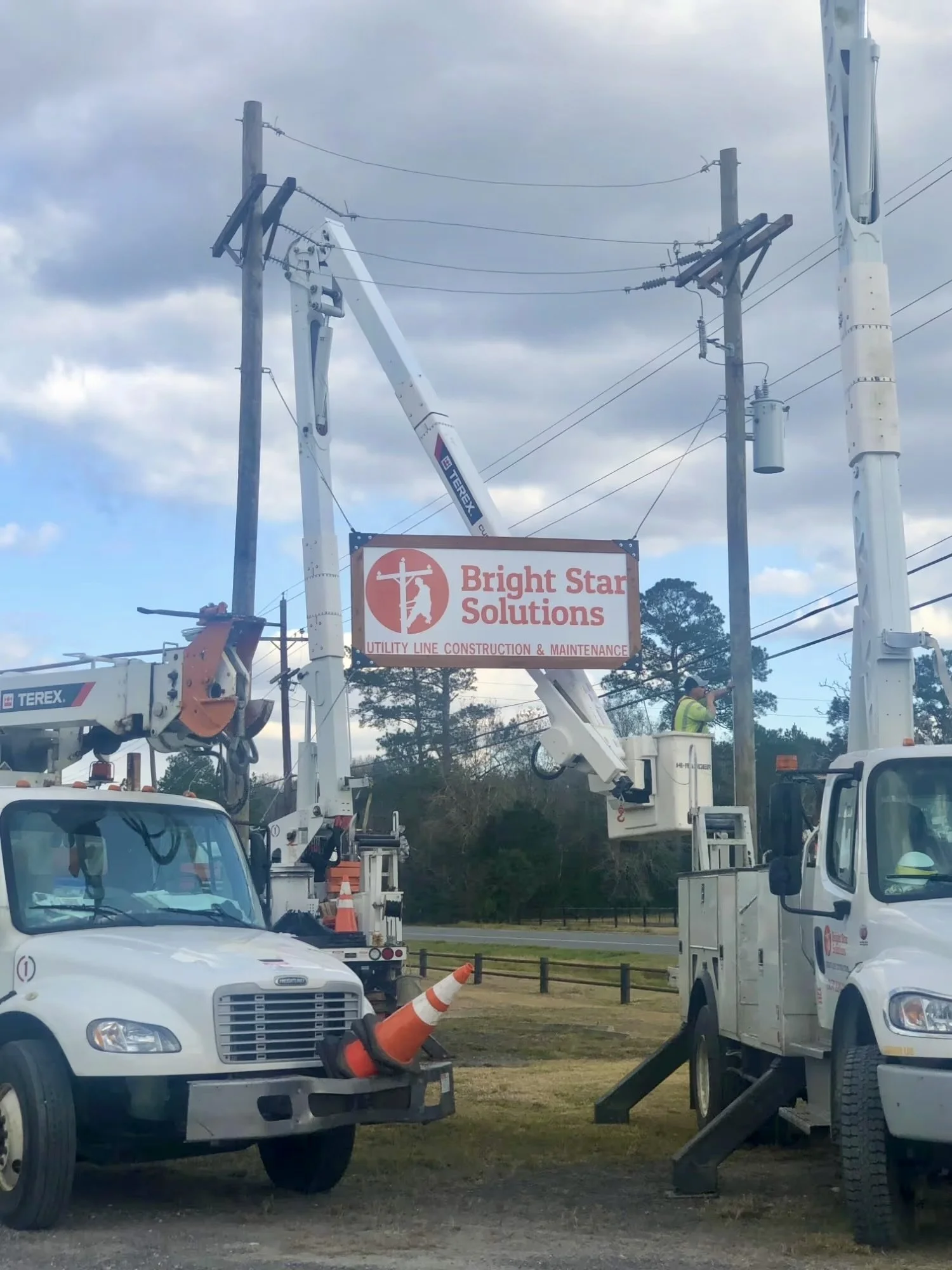
Watch: Bright Star on payroll, reporting and choosing a partner
A union contractor with complex payroll rules, Bright Star moved off QuickBooks and manual processes. What stood out in selection: Dominate built the demo on Bright Star’s own data, not a generic script.
- Payroll that took several people a full day now takes a few hours
- Timekeeping automation integrated directly with Acumatica
- Real-time reporting that moves leadership from reporting results to influencing them
- Growth without adding administrative headcount
Bright Star Solutions, a commercial utility contractor serving major investor-owned utilities, grew to crews in 16 states and more than 350 employees with roughly 122% published revenue growth. Acumatica Construction Edition carried multi-state payroll, field time capture and equipment cost allocation without the administrative load scaling at the same rate.
Bright Star Solutions
Bright Star Solutions is a commercial utility contractor serving major investor-owned utilities, running crews across 16 states with more than 350 employees.
Rapid growth in this segment exposes the back office quickly. Crew-based field operations across state lines mean multi-jurisdiction payroll, unit-price billing against utility owners, and equipment moving between jobs constantly.
The question was never whether the work was there. It was whether the systems could carry the volume without a proportional increase in administrative headcount.
Growth outpacing the back office
Multi-state crew operations put pressure on exactly the functions that break first: payroll across jurisdictions, field time capture, equipment cost allocation and unit-price billing.
A platform sized for the growth curve
Acumatica Construction Edition configured for crew-based utility operations, with field capture and job cost structured to hold up as the geographic footprint expanded.
Capacity that grew faster than headcount
Bright Star scaled to 16 states and 350+ employees with roughly 122% published revenue growth, without the administrative load scaling at the same rate.
Multi-state operations
Crews across 16 states running on one system of record.
Field time at the source
Hours captured on a phone, coded to job and cost code as work happens.
Equipment costed to jobs
Ownership and operating cost charged by usage rather than absorbed as overhead.
Payroll compliance
Multi-jurisdiction payroll handled inside the system.
Growth absorbed
Roughly 122% revenue growth carried by the existing structure.
Visibility at distance
Leadership sees job performance without waiting on the field to report it.
Questions about this implementation
What makes multi-state utility contracting hard on an ERP?
Crew-based operations across state lines mean payroll and compliance across multiple jurisdictions, field time captured far from the office, and equipment moving between jobs constantly. Each of those breaks first when a company outgrows its systems.
How did Bright Star handle equipment costs?
Ownership and operating cost are charged to jobs by usage rather than absorbed into overhead. For equipment-intensive contractors this is frequently the largest single source of hidden margin loss.
Did back-office headcount grow with revenue?
No. Roughly 122% revenue growth and expansion to 16 states were absorbed by the existing structure rather than met with proportional administrative hiring.